Why Is My AC Not Blowing Cold Air? Causes and Fixes for DFW Homeowners
In Summary: Why is my AC not blowing cold air? The most common causes are a thermostat setting, a clogged filter, a tripped breaker, a blocked outdoor unit, a clogged drain, a frozen coil, or low refrigerant from a leak. This guide shows DFW homeowners what to check first and when to call for air conditioning repair.
The short answer: If your AC is not blowing cold air, start with the simple stuff. Check that the thermostat is set to COOL, replace a dirty filter, and look for a tripped breaker. If those check out, the cause is often a frozen evaporator coil, a refrigerant leak, or a failing part, and that’s a job for a licensed technician.
TL;DR
- Check six things first: thermostat, filter, breakers, outdoor disconnect, condensate drain, and outdoor unit clearance.
- Warm air with ice on the lines usually means an airflow or refrigerant problem. Turn the system off and call.
- Low refrigerant means a leak. The U.S. Department of Energy says simply adding refrigerant “is not a solution.”
Key Takeaways
- Many “no cold air” calls start with a filter or thermostat. Check those before anything else.
- Warm air plus ice, hissing, or a tripping breaker needs a pro. Don’t keep running the system.
- Pick a technician who quotes in writing first. Then you know the price before any work begins.
It’s 4 p.m. in July. The house feels sticky. You walk past a vent, hold your hand up, and feel… room-temperature air. The AC is running. The fan is blowing. But it’s not cold.
If you live in Dallas–Fort Worth, you know how fast a warm house gets uncomfortable. The National Weather Service recorded 71 days of 100-degree heat at DFW in 2011. Even in a normal year, your AC works hard for months.
So, why is my AC not blowing cold air? There are a handful of usual suspects. Some you can check in five minutes. Others need a trained technician. This guide walks you through both.
Here’s what we’ll cover:
- What to check before you call
- The most common reasons an AC blows warm air in Texas
- How to know if your AC is low on refrigerant
- Why an AC can be running but not cooling
- When to call for air conditioning repair in Irving and DFW
What Should You Check First When Your AC Isn't Blowing Cold Air?
Before you pick up the phone, take five minutes. Reliant Air Conditioning's "Before You Call" checklist covers six things any homeowner can check safely:
Thermostat. "Make sure it's set to COOL (or HEAT), the temperature is below room temp, and the batteries are good."
Air filter. "A clogged filter chokes airflow and can freeze your evaporator coil." Swap it if it looks gray or dusty.
Breakers. Look for a tripped breaker labeled for the AC, air handler, or furnace. "Reset once — if it trips again, stop and call us."
Outdoor disconnect. Check the pull-out box beside the outdoor unit. "Make sure it's fully seated."
Condensate drain. "A clogged drain can trip a safety float switch and shut your system off."
Outdoor unit clearance. Clear leaves, grass, and shrubs from the condenser. "Leave 2 feet of clearance."
A lot of warm-air problems end right here. A thermostat set to FAN ON instead of AUTO, for example, will blow air all day, even when the system isn't cooling.
Try this: Set your thermostat to COOL and AUTO, drop it a few degrees below room temperature, and wait 10–15 minutes.
Then check the air coming from a vent near the indoor unit."A clogged filter chokes airflow and can freeze your evaporator coil." — Reliant Air Conditioning
What Are the Most Common Reasons an AC Blows Warm Air in Texas?
If the quick checks didn’t fix it, the cause is usually deeper in the system. Reliant Air Conditioning lists three main culprits when an AC is blowing warm air: “refrigerant leak, failed compressor, or frozen evaporator coil.”
Here’s what each one means in plain language:
- Refrigerant leak. Refrigerant carries heat out of your home. When it leaks out, your system can’t remove heat the way it should.
- Failed compressor. The compressor is the heart of the outdoor unit. If it stops working, the fan may still blow, but no cooling happens.
- Frozen evaporator coil. When airflow drops, the indoor coil can get too cold and ice over. Ice blocks airflow even more, so cooling falls off.
Texas heat adds stress, too. The U.S. Department of Energy notes that “The compressor and fan controls can wear out, especially when the air conditioner turns on and off frequently.” Long, hot cooling seasons mean a lot of starts and stops.
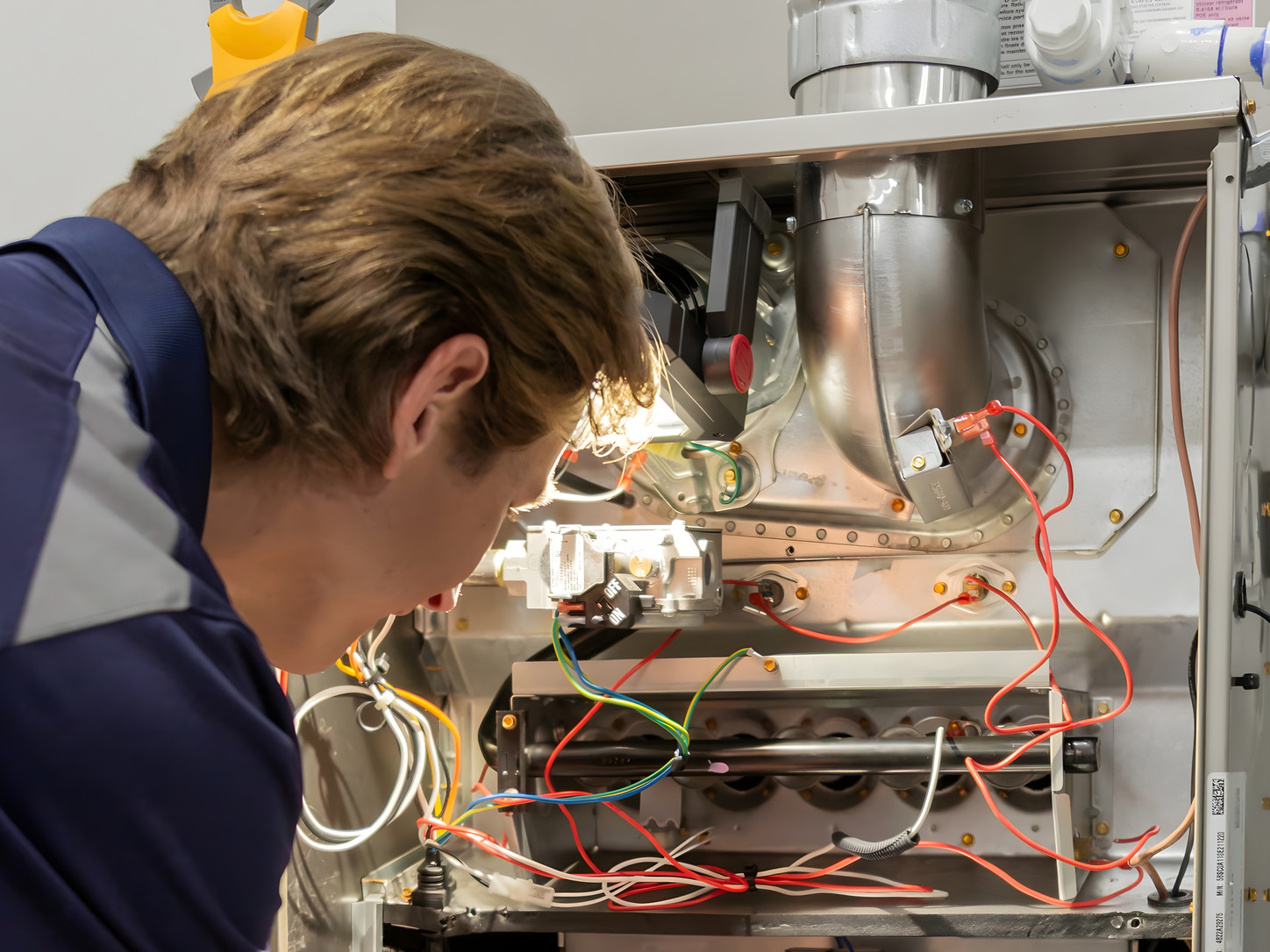
Electrical parts like capacitors and contactors can also fail. They’re part of what gets your outdoor unit running. That’s why they’re on Reliant Air Conditioning’s tune-up checklist.
Try this: Go outside while the AC is on. Is the big fan on top of the outdoor unit spinning? Can you hear the unit humming? If the indoor fan runs but the outdoor unit is silent, note that for your technician.
“The compressor and fan controls can wear out, especially when the air conditioner turns on and off frequently.” — U.S. Department of Energy
Why Is My AC Running but Not Cooling?
This is one of the most common versions of the question. The system sounds normal. The fan is on. The house just won’t cool down.
Here are the usual reasons an AC is running but not cooling:
- Dirty air filter. The U.S. Department of Energy says “Clogged, dirty filters reduce the amount of airflow and significantly reduce a system’s efficiency.”
- Dirty coils. The DOE explains that dirt on the evaporator coil “reduces airflow and insulates the coil, reducing its ability to absorb heat.”
- Blocked outdoor unit. The outdoor condenser needs room to release heat. Grass, leaves, and shrubs can choke it.
- Leaky ducts. ENERGY STAR says “about 20 to 30 percent of the air that moves through the duct system is lost due to leaks, holes, and poorly connected ducts.” In attic ducts, that cooled air ends up heating the attic, not cooling you.
- Thermostat sensor issues. The DOE notes that if the sensor “is knocked out of position, the air conditioner could cycle constantly or behave erratically.”
Sometimes the AC is working, but it’s losing a fight with the heat. Weak airflow, dirty coils, and leaky ducts all chip away at its cooling power.
Try this: Check whether every room is warm or just a few. If only certain rooms are warm, ducts or airflow may be the problem. If the whole house is warm, look at the equipment.
“Clogged, dirty filters reduce the amount of airflow and significantly reduce a system’s efficiency.” — U.S. Department of Energy
How Do I Know If My AC Is Low on Refrigerant in DFW?
Refrigerant is one of the most misunderstood parts of an AC. Here’s the key thing to know: refrigerant isn’t like gas in a car. Your system doesn’t “use it up.”
The U.S. Department of Energy is direct about it: “If your air conditioner is low on refrigerant, either it was undercharged at installation or it leaks. If it leaks, simply adding refrigerant is not a solution.”
Signs your system may be low on refrigerant include:
- Warm or lukewarm air from the vents
- Ice on the refrigerant lines near the outdoor or indoor unit
- A hissing sound near the unit or lines
- The system runs longer but the house never quite cools down
Reliant Air Conditioning lists “Ice on the refrigerant lines” and “Loud banging, buzzing, or hissing” among the common AC problems that call for repair.
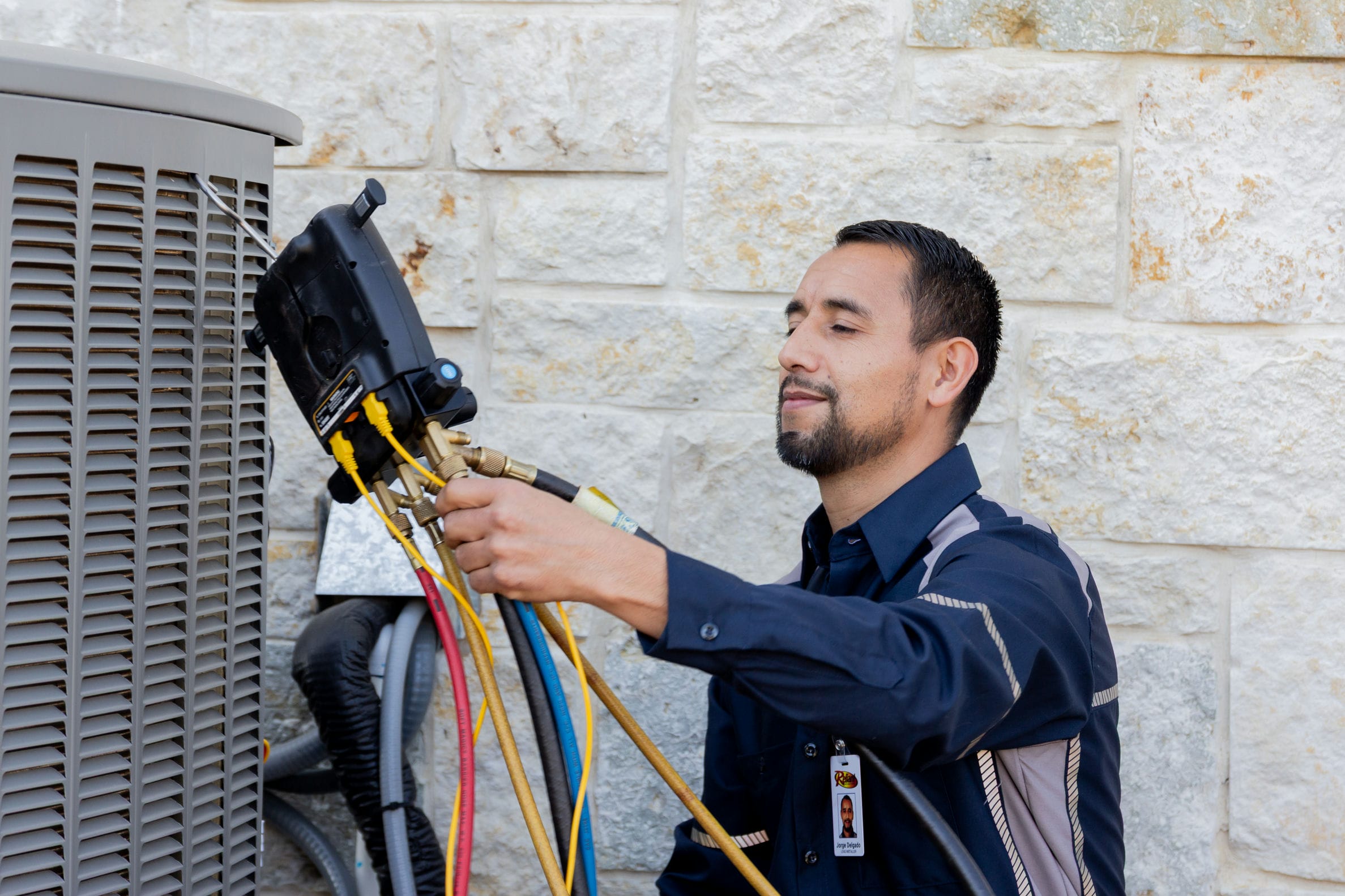
This is not a DIY job. Under Section 608 of the Clean Air Act, the EPA requires certification for technicians “who maintain, service, repair, or dispose of equipment that could release ozone depleting refrigerants into the atmosphere.” The DOE adds that “Refrigerant leaks can also be harmful to the environment.”
Try this: If you see ice on the lines, turn the system to OFF and set the fan to ON to help the ice melt. Then call a technician. Running a frozen system can cause more damage.
“A trained technician should fix any leak, test the repair, and then charge the system with the correct amount of refrigerant.” — U.S. Department of Energy
Can Humidity and a Clogged Drain Stop Your AC From Cooling?
Yes. In North Texas, this one surprises a lot of homeowners.
Your AC doesn’t just cool the air. It pulls moisture out of it, too. That water drips into a pan and flows out through a condensate drain line. When that line clogs with algae or debris, water backs up.
Many systems have a safety float switch for this. Reliant Air Conditioning explains: “A clogged drain can trip a safety float switch and shut your system off.” The fan might keep running while the cooling stops, or the whole system may shut down.
The DOE recommends: “When it’s humid outside, check the condensate drain to make sure it isn’t clogged and is draining properly.” The DOE also notes that “Clogged drain channels prevent a unit from reducing humidity,” which can leave your home feeling sticky even when the temperature looks okay.
Signs of a drain problem include:
- Water around the indoor unit or in the drip pan
- A musty smell near the air handler
- The AC shutting off on its own
Reliant Air Conditioning lists “Water leaking from indoor unit” (often a clogged condensate drain or rusted pan) as one of the common AC problems it repairs.
Try this: Find where your condensate line exits outside your home. On a hot day with the AC running, you should see it dripping. No drip at all can be a sign of a clog.
“When it’s humid outside, check the condensate drain to make sure it isn’t clogged and is draining properly.” — U.S. Department of Energy
When Should You Repair or Replace an AC That Won't Cool?
Once a technician finds the cause, you’ll face a decision. Fix it, or start fresh?
Reliant Air Conditioning gives a simple rule of thumb on its AC repair page. Repair usually makes sense if the system is under 10 years old and the repair costs less than half the price of a new system. Replacement usually makes more sense if the system is over 12 years old, low-efficiency, and facing an expensive repair.
Repair costs vary. A capacitor replacement sits at the low end. A compressor or evaporator coil replacement costs much more. That’s why a written quote matters.
If someone tells you to replace your system, it’s fair to get a second look. Reliant Air Conditioning offers Free 2nd Opinions on replacement quotes.
Try this: Find your system’s age before your technician arrives. It’s usually printed on the data plate of the outdoor unit. Knowing it helps you weigh repair against replacement.
“Repair the right way. No upsells. No games.” — Reliant Air Conditioning
Who Fixes AC Units That Are Not Blowing Cold Air in Irving, TX?
If your AC is still blowing warm air after the basic checks, it’s time for air conditioning repair from someone you can trust.
Reliant Air Conditioning is headquartered at 3250 Story Road W #106 in Irving, TX, and has served Dallas–Fort Worth homeowners since 1983. Here’s what you get:
- NATE-certified technicians who are background-checked
- Techs Not Paid On Commission, so recommendations are about your system, not a sales target
- A written quote before any work starts, with no surprise fees
- A 100% satisfaction guarantee on AC repair
- Licensed, bonded, and insured, Texas license TACLA34473E
- A 4.9-star average rating across Google, BBB, Angi, and Yelp
Reliant Air Conditioning serves Irving, Las Colinas, Dallas, Fort Worth, Coppell, Grapevine, Arlington, Plano, and communities across the Metroplex.
Try this: When you call, describe what you’ve already checked: thermostat setting, filter, breaker, outdoor unit. It helps the technician get to the real problem faster.
“Written quote before any work starts and no surprise fees.” — Reliant Air Conditioning
Key Takeaways: Why Is My AC Not Cooling?
So, why is my AC not blowing cold air? Often it’s something simple. Sometimes it isn’t. Either way, you now know how to tell the difference.
- Start with the six quick checks. Thermostat, filter, breakers, disconnect, drain, and outdoor clearance.
- Respect the warning signs. Ice, hissing, water leaks, and repeat breaker trips mean it’s time to call.
- Fix leaks, don’t just refill. Low refrigerant means a leak, and that needs a certified technician.
A warm house in a Texas summer isn’t just uncomfortable. It’s stressful. The right help makes it simple.
Frequently Asked Questions
Why is my AC not blowing cold air in Irving, TX?
The most common causes are a thermostat setting, a dirty filter, a tripped breaker, a clogged condensate drain, a frozen evaporator coil, or a refrigerant leak. Start with the basic checks, then call a licensed technician if the problem continues.
What are common reasons an AC blows warm air in Texas?
Refrigerant leaks, failed compressors, and frozen evaporator coils are the top causes. Long cooling seasons can also wear out compressor and fan controls, according to the U.S. Department of Energy.
What should I do when my AC stops blowing cold air in DFW?
Check your thermostat, filter, breakers, outdoor disconnect, condensate drain, and outdoor unit clearance. If you see ice on the lines, turn the system off and call for repair.
How do I know if my AC is low on refrigerant?
Common signs include warm air, ice on refrigerant lines, hissing sounds, and long run times. Low refrigerant usually means a leak, and the DOE says simply adding refrigerant “is not a solution.”
Can I add refrigerant to my AC myself?
No. The EPA requires technicians who handle refrigerants to be certified under Section 608 of the Clean Air Act.
AC Not Working? We'll Fix It. Fast.
If your AC is running but not cooling, don’t sweat it out. Reliant Air Conditioning gives DFW homeowners straight answers, no gimmicks. Gimmick-Free Since ’83.
Call Reliant Air Conditioning at (214) 227-5946 or visit reliantairconditioning.com to schedule air conditioning repair. Your Comfort Heroes are ready.
Sources
- U.S. Department of Energy, “Common Air Conditioner Problems” — https://www.energy.gov/energysaver/common-air-conditioner-problems
- U.S. Department of Energy, “Maintaining Your Air Conditioner” — https://www.energy.gov/energysaver/maintaining-your-air-conditioner
- U.S. EPA, “Section 608 Technician Certification” — https://www.epa.gov/section608/section-608-technician-certification-0
- ENERGY STAR, “Duct Sealing” — https://www.energystar.gov/saveathome/heating-cooling/duct-sealing
- National Weather Service Fort Worth, “DFW 100° Days” — https://www.weather.gov/fwd/d100info
- Reliant Air Conditioning, “What To Do Before You Call” — https://reliantairconditioning.com/what-to-do-before-you-call
- Reliant Air Conditioning, AC Repair — https://reliantairconditioning.com/air-conditioning-repair/
- Reliant Air Conditioning, AC Maintenance — https://reliantairconditioning.com/ac-maintenance/
- Reliant Air Conditioning, FAQ — https://reliantairconditioning.com/faq/
- Reliant Air Conditioning, Homepage — https://reliantairconditioning.com/